Let the hot, damp air out of your roof space.
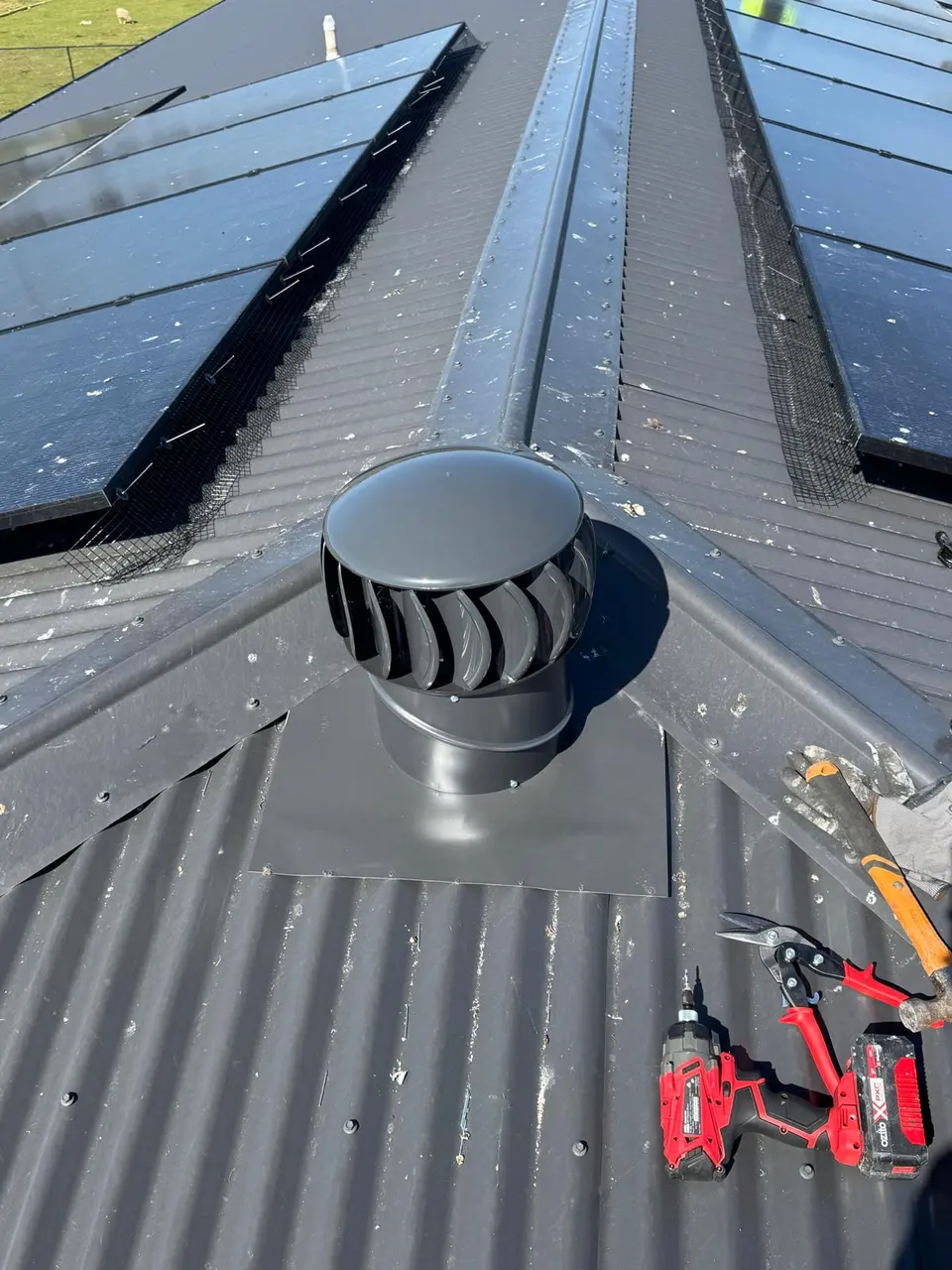
A whirly bird is a wind-driven roof vent. As it spins, it draws warm, moist air out of the roof space and lets cooler outside air replace it. Fitted in the right spot and sealed properly, it is a simple, power-free way to help a stuffy roof space breathe.
- Every job includes
- Roof space and intake assessment
- Placement explained before we cut
- Base flashing to suit tile or metal profile
- Photos of the opening and finished vent
Understanding whirly bird installation
On a summer afternoon, the air trapped between your tiles or sheets and the ceiling can get very hot, and that heat sits on top of your ceiling insulation well into the evening. In winter, warm moist air from showers, cooking and drying clothes can rise into the roof space and condense on cold sarking, battens or the underside of metal sheets. A whirly bird gives that air somewhere to go.
It is worth being clear about what a whirly bird is not. It is not air conditioning, and it will not cool the rooms you live in on its own. It works best alongside good ceiling insulation and, where present, sarking. It can help reduce moisture build-up, but it is not a guaranteed fix for condensation or mould. If moisture is coming from a leak, a bathroom fan venting into the roof or poor drainage, that needs fixing first, and we will tell you if we see it.
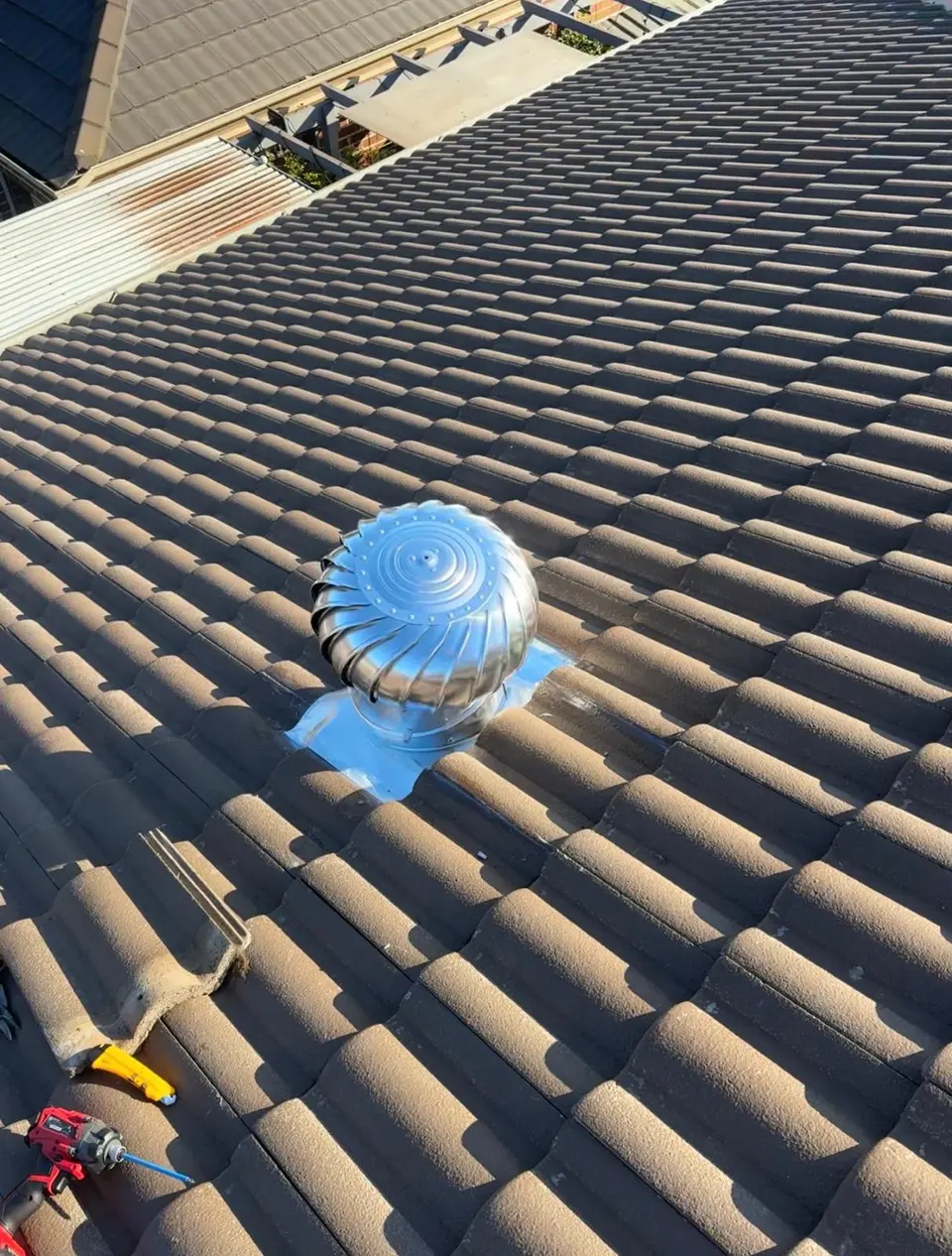
We install on concrete and terracotta tile roofs and on Colorbond, Zincalume and corrugated iron roofs. On tiles, the vent sits on a flashed base dressed into the tile profile. On metal, it sits on a base flashing shaped to the sheet profile and fixed and sealed to the sheeting. Either way, the opening is cut cleanly between rafters, and the base is weatherproofed so rain runs around the vent, not into the roof.
Do any of these sound familiar?
- 01Ceilings that still radiate heat late on summer evenings
- 02A roof space that is stifling when you go up the manhole
- 03Condensation or drips on the underside of a metal roof
- 04Musty smells or damp marks in the roof space
- 05Black spotting on ceilings near the roofline
- 06You are restoring or re-roofing and want ventilation added at the same time
How we do it, step by step
You will know what is happening on your roof at every stage. We share photos as we go so nothing is hidden behind the gutter line.
See our work in the galleryRoof space assessment
We look inside the roof space where access allows: rafter spacing, insulation, sarking, existing vents and any signs of moisture or leaks. We also check where bathroom and kitchen exhausts actually discharge.
Placement & quantity
Vents are positioned near the ridge on a suitable roof face, clear of valleys, and away from rafters, wiring and solar arrays. How many you need depends on roof size, shape and pitch, and we will explain our reasoning rather than pick a number.
Intake ventilation check
A whirly bird needs replacement air coming in, usually through eaves, gaps or vents lower on the roof. We check that this path exists, because an exhaust with no intake does very little.
Cut & prepare the opening
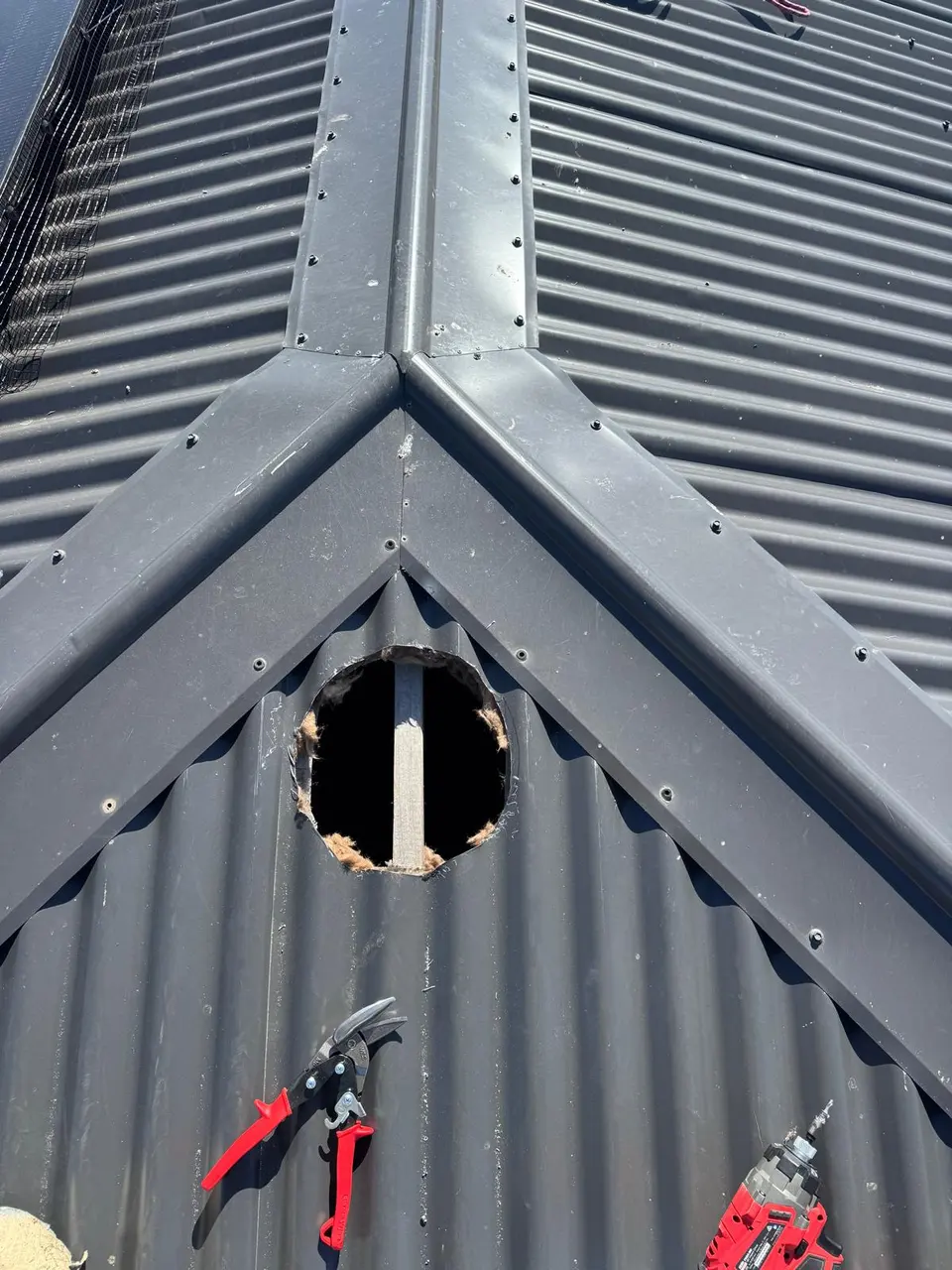
Tiles are lifted or the sheet is marked out, and a neat opening is cut between rafters. Sarking is cut and folded back so any water is directed away, not into the ceiling.
Fit, flash & seal
The base is fitted and flashed to suit the tile or sheet profile, the vent is set plumb so it spins freely, and fixings and laps are sealed.
Check & clean up
We check that it turns smoothly, confirm the surrounding tiles or sheets are sound, remove offcuts and show you photos of the finished install.
Good to know
Not a cooling system
Whirly birds move roof-space air, not room air. They complement insulation and do not replace air conditioning.
Moisture has causes
If condensation comes from a leak or an exhaust fan venting into the roof, ventilation alone will not solve it. We look for the source first.
Some roofs need a different answer
Very low-pitched roofs, roofs with limited access, or homes with complex roof shapes may suit a different vent type or position. We will say so if that is the case.
Whirly Bird Installation FAQs
Will a whirly bird cool my house?
It helps let built-up heat out of the roof space, which can take some load off the ceiling below. It does not cool your rooms directly and is not a substitute for insulation or air conditioning.
Will it fix condensation or mould?
Better roof-space ventilation can help reduce moisture build-up, but it is not a guaranteed fix. We check for leaks, exhausts venting into the roof and other sources while we are there.
Can you fit one on a tiled roof?
Yes. Tiles are lifted around the opening and the vent sits on a flashed base dressed into the tile profile so water sheds around it.
Can you fit one on a Colorbond or tin roof?
Yes. The base flashing is shaped to the sheet profile and fixed and sealed to the sheeting.
How many do I need?
It depends on the size, shape and pitch of your roof and on how much air can get in at the eaves. We assess that on site and explain the recommendation in your quote.
Do they make noise?
A correctly installed vent set plumb should turn quietly. If yours squeaks or wobbles, it is worth having checked.
Book a whirly bird installation inspection
- 1Send your details
Use the form, call, or message us on WhatsApp. A suburb and a sentence about the problem is plenty.
- 2We get in touch
A real person from our team calls to understand the job and book a time to look at it.
- 3Inspection & written quote
We inspect, show you what we found, and give you a clear written quote. No pressure, no obligation.
Request a quote
Fields marked * are required.
Other services

We work across Melbourne and regional Victoria. Check the areas we serve.